SMELL-RS
A self-administered, digital test for olfactory dysfunction that measures how well people tell smells apart and how faint a smell they can detect, without asking them to name anything.
- Years
- 2019 to 2025 (research), 2026 (preprint)
- Role
- Research consultant under Dr. Andreas Keller, second author
- Contributions
- Odor-mixture preparation, UI design, figure illustration, participant testing, device prototyping
- Paper
- medRxiv, Mar 31, 2026
- DOI
- 10.64898/2026.03.28.26349316
Why it matters
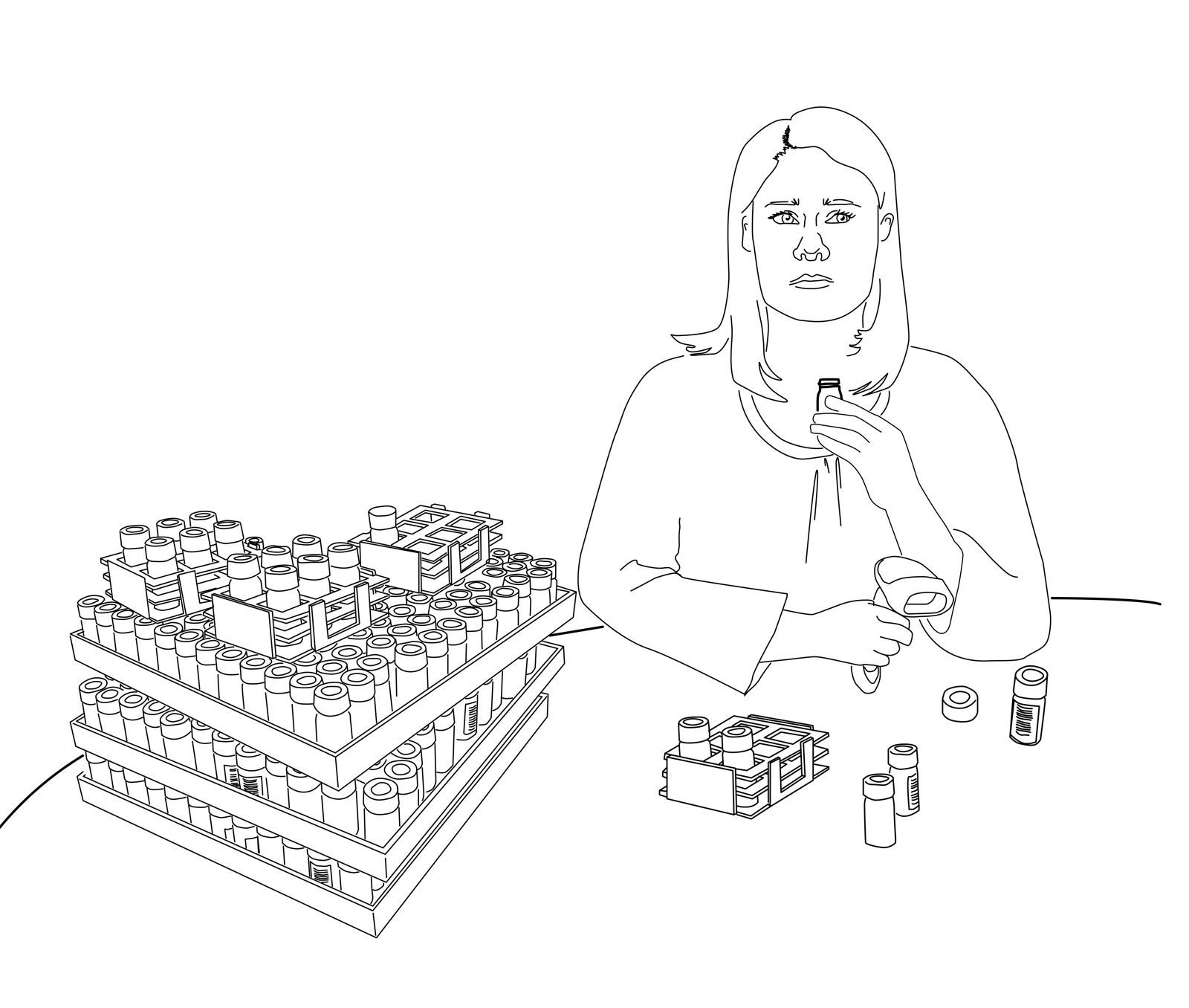
Smell testing is important in clinical care but is used far less than it should be, because the standard tests take time, staff and materials. Many tests also depend on naming smells, which mixes up smelling with language and culture.
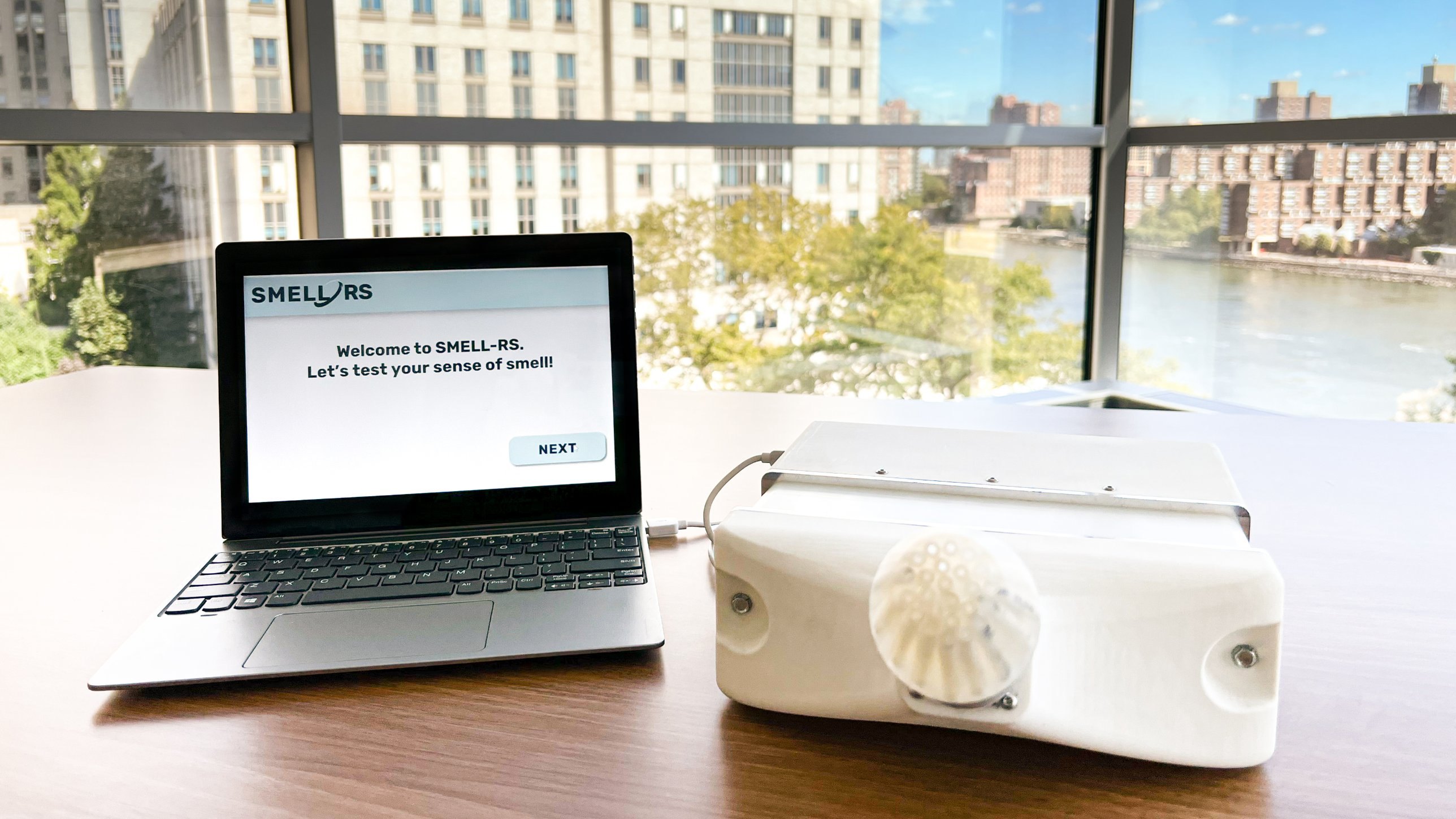
SMELL-RS tests two things with no naming at all. The first is olfactory resolution (SMELL-R), the ability to tell odor mixtures apart. The second is olfactory sensitivity (SMELL-S), the faintest odor a person can detect. The test is digital and fully automated, so people can take it on their own.
How the test works
Each trial presents three smells. Two are the same and one is different, and the person picks the odd one out on screen. The test adapts as it goes, and no one has to put a smell into words.
I designed the step-by-step instructions people see before they start.
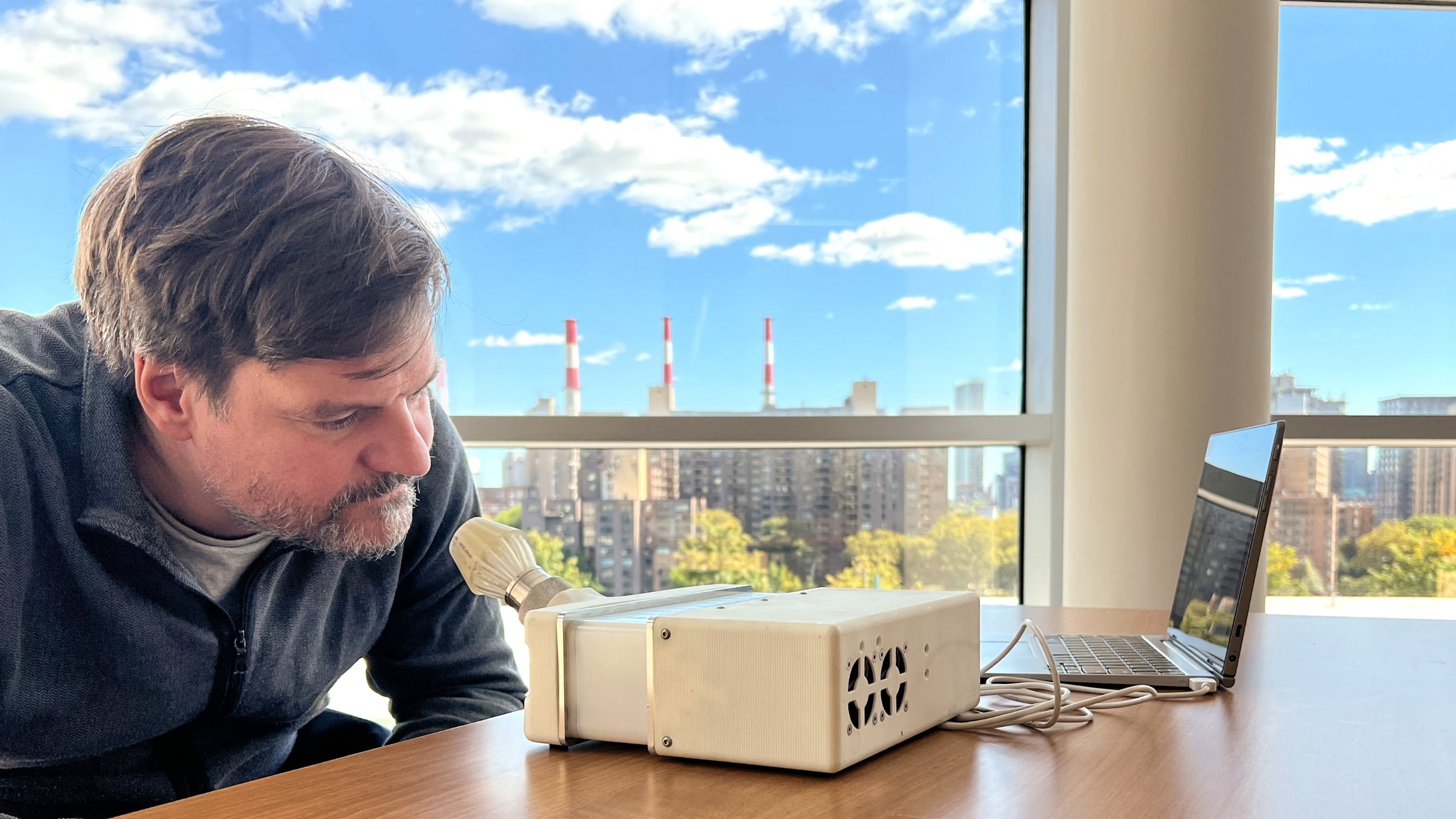
Animation, no sound. A person holds a nozzle connected to the SMELL-RS device and sniffs three times while a screen shows the numbers 1, 2 and 3. One of the three smells is different. They tap the number that smelled different. When they are unsure, they guess, and the test moves on.
From prototype to device
What the study found
The authors conclude that SMELL-RS is rapid, fully automated, reliable and accurate, and suited to self-administration in clinical settings.
- Participants
- 100 people with and without smell dysfunction, recruited at a tertiary care center in Geneva
- Reliability
- Test-retest ICC = 0.71 (p < 0.0001) for the composite score
- Agreement
- Correlated with the Sniffin’ Sticks composite score, r = 0.68 (p < 0.0001)
- Time
- Mean 5.9 min for SMELL-R and 5.5 min for SMELL-S, two to three times faster than the matching Sniffin’ Sticks tests
- Status
- Preprint, not yet peer reviewed
My part
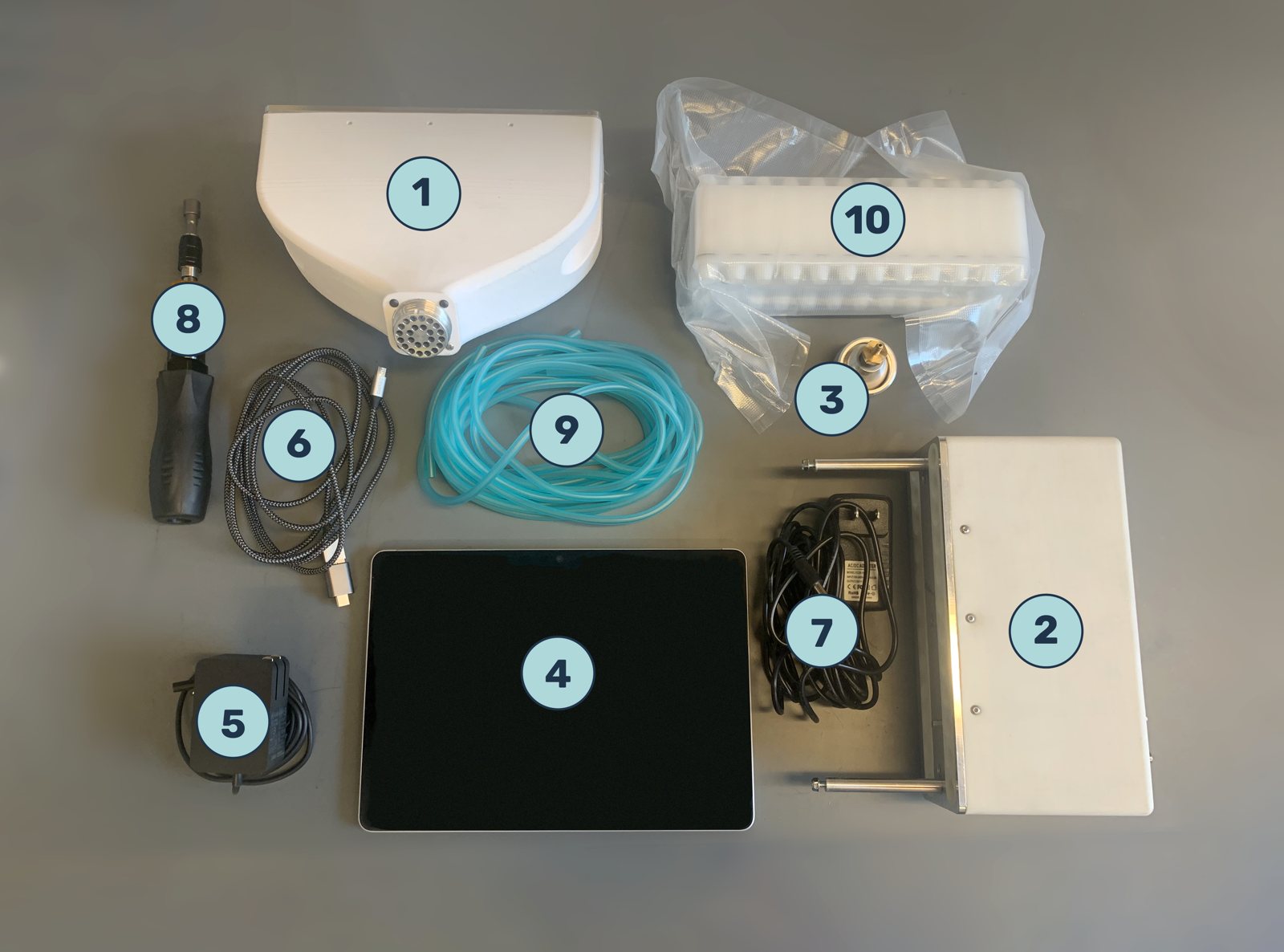
Across six years as a research consultant I worked on SMELL-RS from the device to the screen. I ran user testing, collecting data by testing the device with people, and prototyped rapidly with Rockefeller's PIT team, 3D modeling and printing parts.
I made the odor cartridges, tested concentrations and mixtures, and tested materials and procedures for the cartridge inlays. I ran quality assurance on the device, including mini PID and airflow measurements.
I designed the front end of the test app with a focus on accessibility and produced its logo, photos, graphics, the paper's figures and the animation that explains the test. Throughout, I worked with the other teams and departments on the project.
Press
- 2024FONGIT Innovation Fund backs HeroSupport and SmellRS to advance healthcare innovation, Greater Geneva Bern area. SmellRS, a Geneva University Hospitals project, granted CHF 50,000.
Citation
Hsieh JW, Dougherty M, Poulopoulou A, Blidariu D, Senn P, Hopper R, Patel D, Maggioni E, Obrist M, Vosshall LB, Keller A, Landis BN. SMELL-RS: A Self-administered, Digital Test for Olfactory Dysfunction that is Rapid, Reliable, and Accurate. medRxiv 2026. doi:10.64898/2026.03.28.26349316
A collaboration between Geneva University Hospitals, the Laboratory of Neurogenetics and Behavior at The Rockefeller University, and Hynt Labs. SMELL-RS is patented by The Rockefeller University.