/forest bath
The smell of the forest, pumped out to the sidewalks of Chinatown, New York, at the height of the pandemic.
- Year
- 2021 to 2022
- Medium
- Mycelium, sawdust, wax, resin, fragrance materials, projection
- First shown
- Olfactory Art Keller, New York, inaugural exhibition
About the work
After months of a pandemic and political strife, on top of global injustice, loss and suffering, people needed care more than ever. In New York, sources of environmental care are sparse, and access to them is not guaranteed. /forest bath brought the forest, and the benefits of forest bathing, directly to the city.
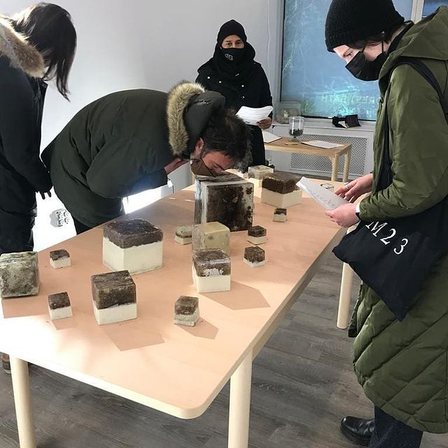
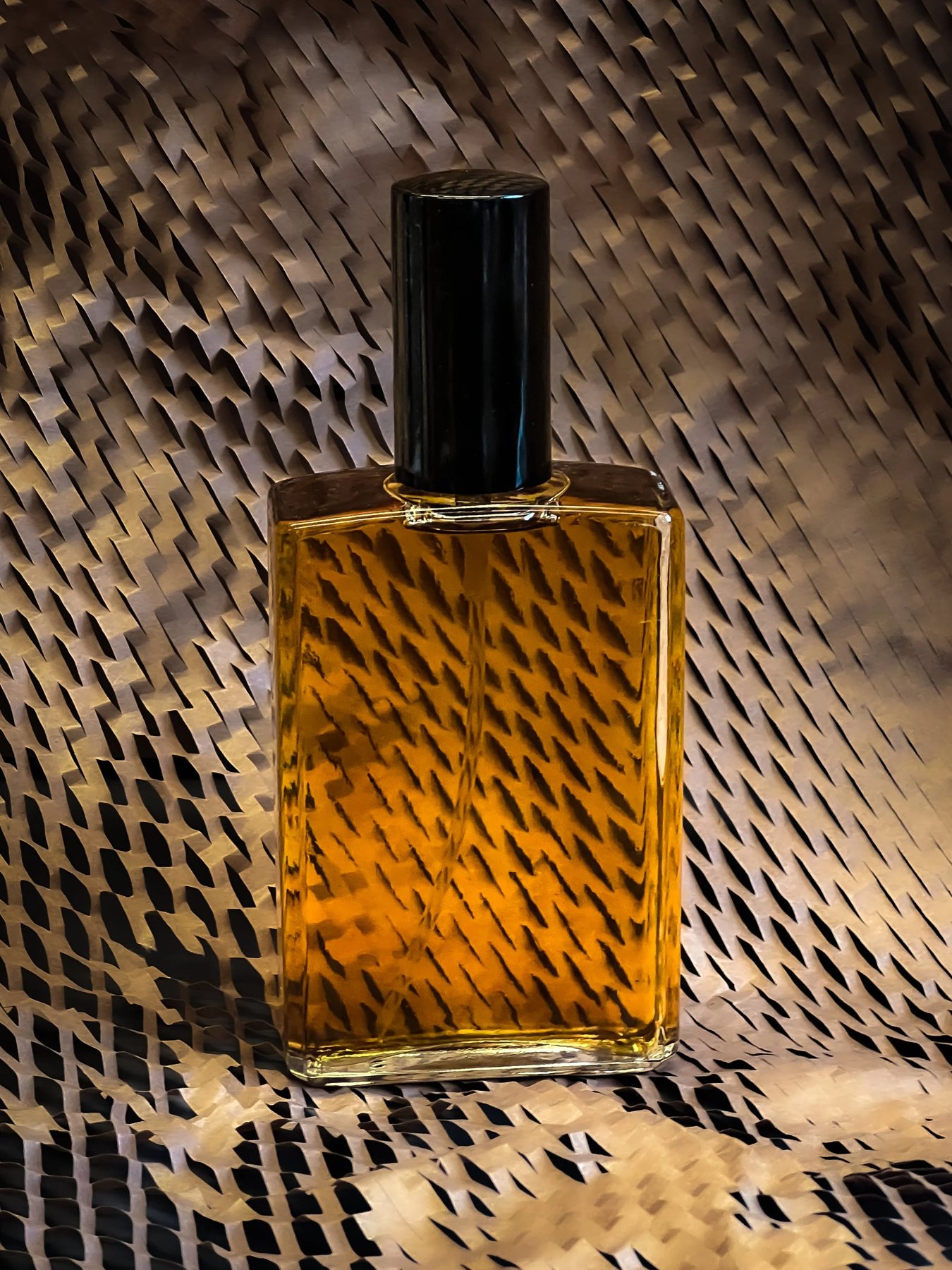
The scent of the forest was pumped out onto the sidewalk, so the piece existed outside the gallery as much as within it and each person could choose how to meet it. Passersby and gallery guests were invited to sit and breathe in the forest, a mix of phytoncides and woodland materials, including essential oils I made myself. The smell was built from GC-MS readings taken around the country and from materials distilled at my home.
As night fell, projections of a forest appeared on the gallery glass, placing each viewer at the base of a tree.
The objects
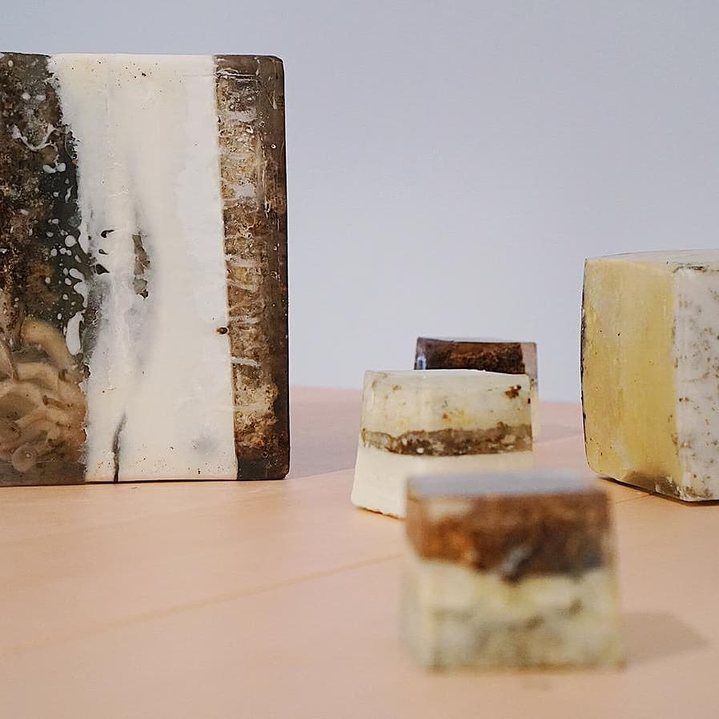
Scented objects were scattered through the gallery. They are made of wax and mycelium, the roots of mushrooms and the veins of the forest. Each carries the material of the woods and its own scent, one element of the forest. Together they make the scent of the forest.
Process
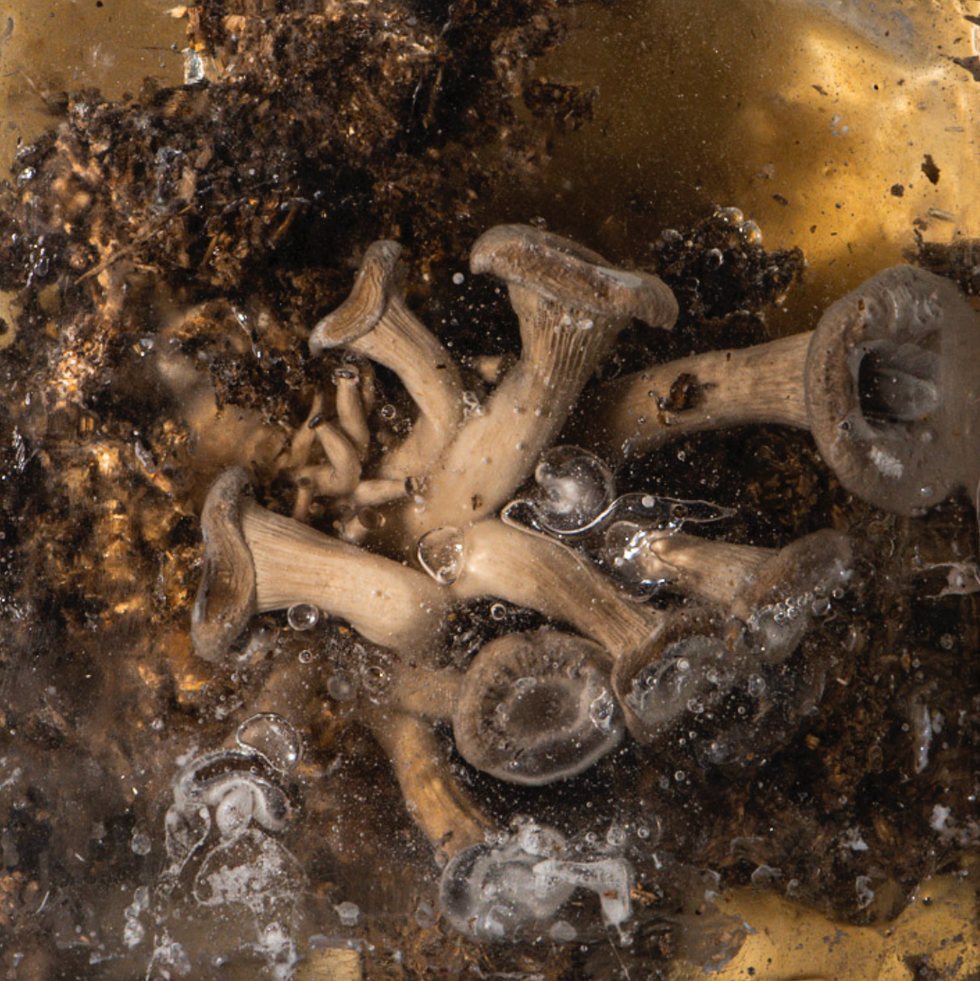
Each object was grown from the mycelium of blue oyster mushrooms. Mycelium bags were broken up and put into molds, where they grew until they filled each form. Once ready to flower, the blocks were baked to stop growth and set the shapes, then combined with scented wax and preserved with resin.
In Japan, the formal practice of shinrin-yoku, or forest bathing, emerged in the 1980s and is still researched and practiced as a physical and mental therapy. Much of its effect is attributed to phytoncides, the volatile compounds trees give off.
The scent
- Naturals
- Pine, myrcene, lemon, mushroom, patchouli, sweet orange, orange, fir balsam, cedar, vetiver, castoreum, dirt, grass, mitti attar
- Synthetics
- White oak, Clearwood, camphene, pinene, cedrenes, cedrol, cedryl acetate, farnesene, limonene, linalyl acetate, isobornyl acetate, benzyl acetate, amyl cinnamal, linalool, mushroom alcohol, geosmin, butylcyclohexyl acetate, Galaxolide, leaf alcohol, Hivertal, butylated hydroxytoluene, cumenol, carvacrol, Synarome, oakmoss
Shown at
- 2022Pleasures From The Garden, SAIC, Chicago
- 2022OAK@IAO, selected works, presented by Olfactory Art Keller, The Institute for Art and Olfaction, Los Angeles
- 2021/forest bath, solo, inaugural exhibition, Olfactory Art Keller, New York, Feb 12 to Mar 13
Press
- 2023Where Scent Meets Art: A Forest Bath in an Urban Gallery, NAHA
- 2022Sniffing Out the Science of Smelling, Smithsonian Magazine
- 2021Olfactory Art: /FOREST BATH, Scent Appreciation
- 2021Meet a Nose: M Dougherty, The Institute for Art and Olfaction (video)
- 2021Olfactory Report 3, Aromatica Poetica
Credits
Gallery owner and curator: Dr. Andreas Keller, Olfactory Art Keller. Mycology consultant: Brian Versek. Mycelium: Mycopolitan Mushroom Co. A/V consultant: TJ Pulliam. Equipment rental: The Family. Printing: Center City Print. With thanks to Courtney Wold and the Halton and Dougherty families. In loving memory of Edward Halton.